5 months ago. Diagram the cross section of a graduated cylinder illustrating how to read the meniscus.
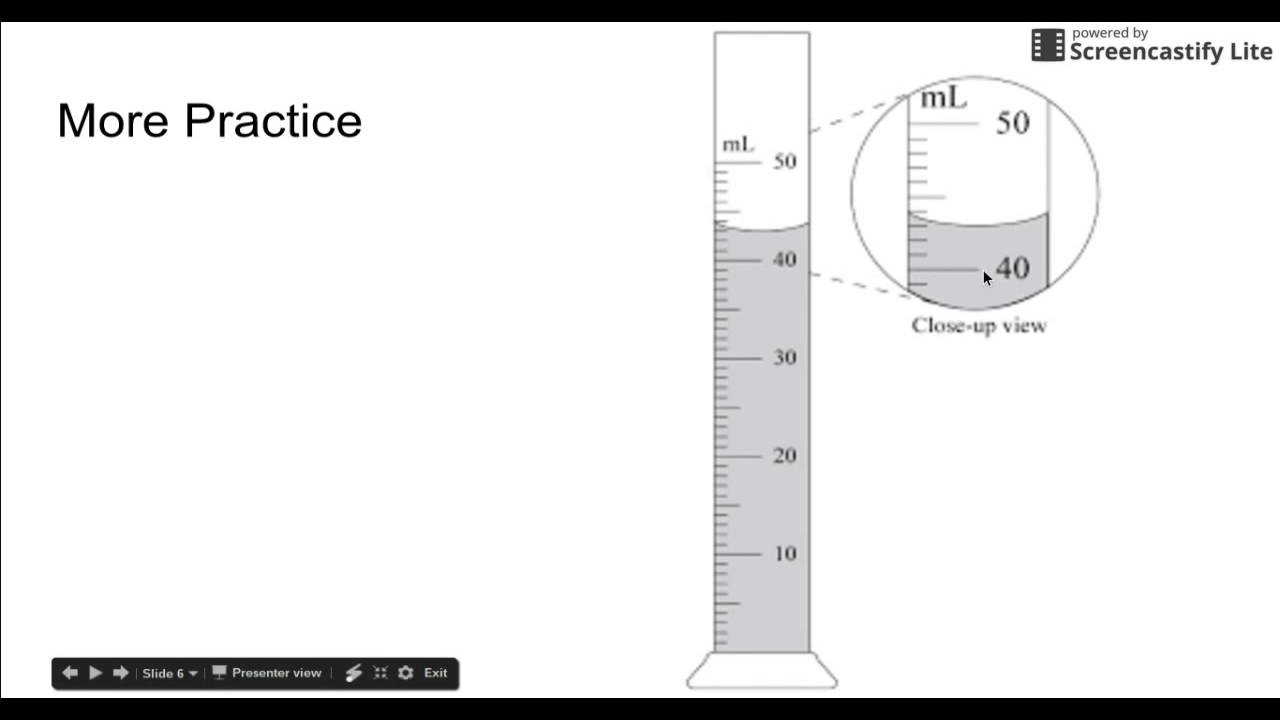
How To Read A Graduated Cylinder Youtube
The graduated cylinder is used for measuring the volume of liquids in an experiment.
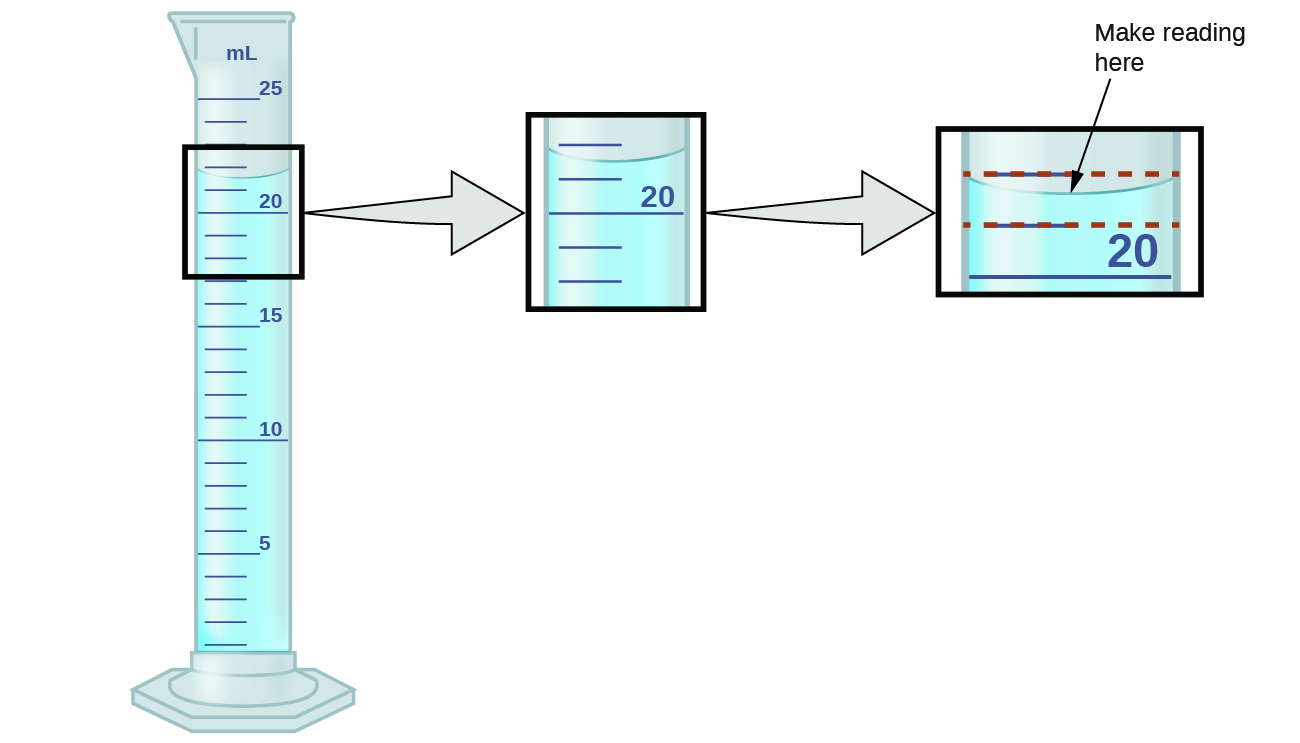
. The diagram below shows a portion of a graduated cylinder. Think of cutting fruit in half and seeing the seeds. Diagram the cross section of a graduated cylinder illustrating how to read the meniscus.
A cylinder is a 3D shape with a circular cross-section and a curved surface. You have to keep the cylinder steadily and figure out the lower meniscus. The least sensitive balance most likely to be in my laboratory would be a top loading balance which can have a sensitivity of.
What is the sensitivity of the least sensitive balance most likely to be in your laboratory. Graduated Cylinder Worksheet A graduated cylinder can have numerous scales. This should be in the center of the graduated cylinder.
The water in a cylinder will form a curve called the meniscus 3. You wouldnt know what the inside looks like until you did that. Where π is a constant 314159265 which is the ratio of the circumference to diameter of a circle while R is the radius of the cylinder.
Replacement is the measurement of the change in the volume of water when materials are added to it. A cross section diagram is what you would see if you could take a knife and cut through the object and see what the new surfaceprofile looks like. The diagram below shows a cross section of a portion of Earths crust that has not been.
This answer is not useful. View the full answer. The focal points will be on the major axis equally separated from the centre point of the ellipse by a distance of.
The student then dropped a solid material into the graduated cylinder and the water level rose to 359 mL. Identify the shapes of two-dimensional cross-sections of three-dimensional objects and identify three-dimensional objects generated by rotations of two. A cross section of Earth is shown below.
Lab tool used to measure liquid volume. Diagram the cross section of a graduated cylinder illustrating how to read the meniscus. Experimental Procedure Part B.
Diagram the cross section of a graduated cylinder illustrating how to read the meniscus. So all you need to know to be able to calculate the cross sectional area is its radius. Show activity on this post.
Diagram the cross section of a graduated cylinder illustrating how to read the meniscus. What is the sensitivity of the least sensitive balance most likely to be in your laboratory. The diagram shows the Moon in various positions around Earth.
Cross Sectional Area of a Cylinder π x R2. The cross section below represents two types of sorted-sand depositional features found at a coastal location. Up to 256 cash back A student filled a graduated cylinder with water and read the meniscus at 258 mL.
Play this game to review Earth Sciences. The diagram below shows water in a graduated cylinder. Place the graduated cylinder on a level surface with the measurement lines facing you.
I Determine the value for the minor grids on the cylinder. It has no straight edges. Experimental Procedure Part B.
If the solid material had a density of 299 gmL determine the mass of the solid object. Diagram the cross section of a graduated cylinder illustrating how to read the meniscus 160 4. A student is viewing a plant stem cross section using a compound light microscope.
What is the volume of the liquid in this cylinder. In this lesson you will learn how to visualize the 2D cross-sections of cylinders by analyzing if a plane intersects with straight or curved surfaces. What is the sensitivity of the least sensitive balance most likely to be in your laboratory.
The curve seen at the top of a liquid in a graduated cylinder always read the bottom of the curve Graduated Cylinder. Experimental Procedure Part B. A fine wire mesh screen covers the bottom of each column to prevent the sediment from falling out.
To find the volume or surface area of a cylinder calculate it in the same. 8R Science Final Review- 2 DRAFT. Chemistry questions and answers.
If you cut the cylinder at an angle θ to the axis of symmetry you will create an ellipse with minor axis r and major axis r sec. Your eye should be level with the top of the liquid 4. The diagrams represent four columns labeled A B C and D that are partially filled with equal volumes of dry sorted sediments.
The lower meniscus of the liquid is a downward part of the curve. About Press Copyright Contact us Creators Advertise Developers Terms Privacy Policy Safety How YouTube works Test new features Press Copyright Contact us Creators. The isopropyl alcohol solution being tested in todays lab is a a.
A student states that the graduated cylinder contains 150 mL of water. 20 20 10 When reading a graduated cylinder you need to keep the graduated cylinder on the desk and lower your eyes to the level of the meniscus and you read where the bottom of the meniscus is. Diagram the cross section of a graduated cylinder illustrating how to read the meniscus 160 4.
Cross sections are done a lot on engineering drawings to clearly show the details of parts. Find the bottom of the curved meniscus in the water. D r sec 2.
Get it to eye level and read the point in the water where it dips. Students added a small rock to a graduated cylinder with 16 mL of water. The diagram below represents the measurement of a biological specimen.
Density of Isopropyl alcohol Diagram or describe the cross section of a graduated cylinder illustrating how to read the meniscus Why is it necessary to conduct more than one trial when measuring the density of water for each piece of glassware. Diagram the cross section of a graduated cylinder illustrating how to read the meniscus. In which position is the Moon located when tides on Earth are especially high and low.
Lesson Standard - CCSSHSG-GMDB4.

Figure 2 Cross Section Of A Split Screw Spline Mullion And Example Of Construction Details Architecture Bungalow House Design Window Detail
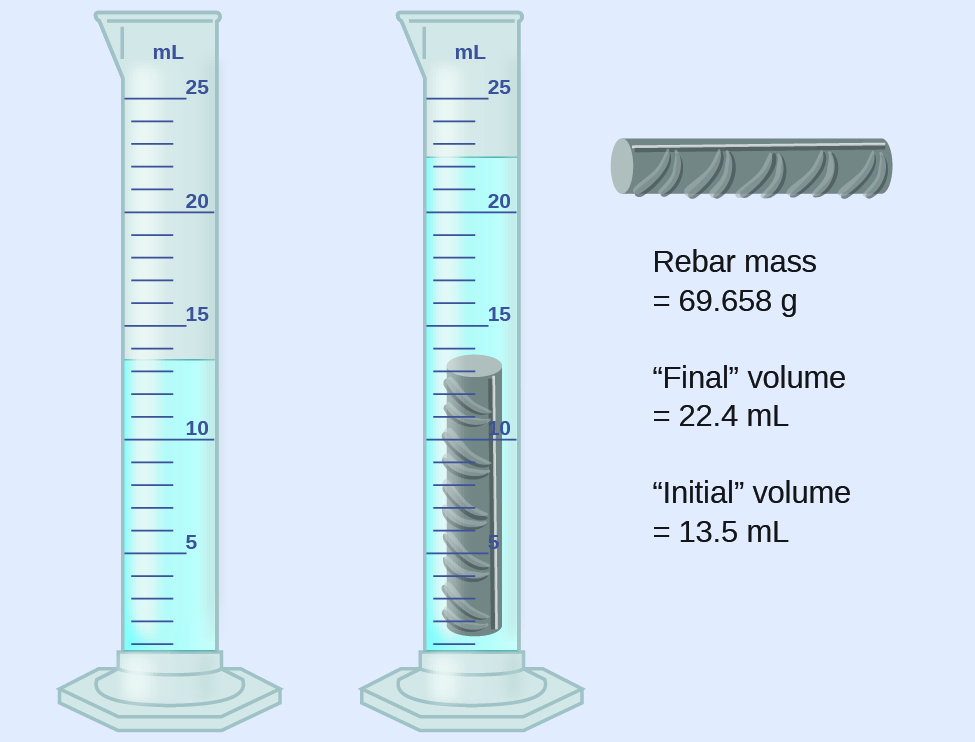
1 5 Measurement Uncertainty Accuracy And Precision Chemistry
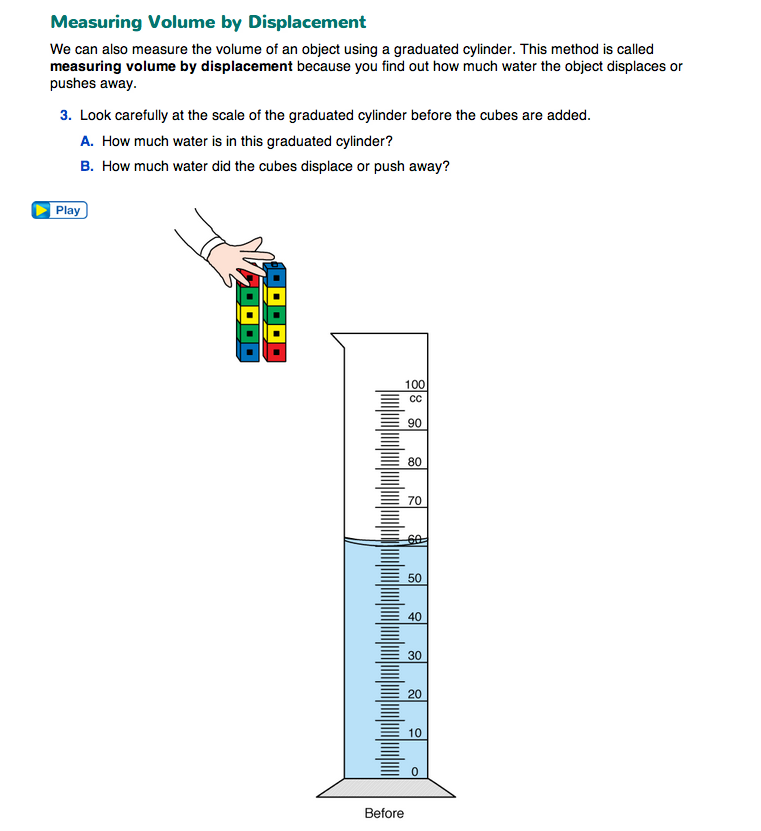
Math Trailblazers
1 5 Measurement Uncertainty Accuracy And Precision Chemistry



0 Comments